
Shift Performance, Machine Utilisation and Quality in One Pane
Manufacturing Execution Dashboard
61% → 74%
OEE across 34 machines in eight months
34
machines unified across four vendors and two decades

Energy / Critical Infrastructure Security
Cutting Nuisance Alarms by 94% at Unmanned Sites

Background
A distribution network operator ran motion-triggered cameras at 60 unmanned substations. Vegetation, rain, spiders on the lens and kangaroos generated so many alerts that the monitoring contractor had effectively stopped acting on them - a textbook alarm-fatigue failure at sites that genuinely needed watching.
The problem
Backhaul at most sites was metered LTE, so streaming video to a central analytics service was neither affordable nor reliable. Any classifier had to run on the existing pole-mounted power budget, tolerate 50 °C enclosure temperatures through summer, and be conservative in the one direction that matters: a missed genuine intrusion is far more costly than an extra false positive.
Approach
We retrofitted each site with a compact edge unit - a Hailo-8 accelerator alongside the existing ONVIF camera - running person, vehicle and animal detection locally at 12 fps. Classification decides whether anything leaves the site at all: animal and vegetation events are counted and discarded, while person or vehicle detections push a short clip and a structured event over MQTT. We deliberately tuned the operating point toward recall, accepting more false positives than a balanced model would, because the operator's cost asymmetry demanded it. A weekly summary of discarded events lets the operator audit what the classifier is suppressing rather than trusting it blindly.
Outcome
Nuisance alerts fell 94% across the fleet, and the monitoring contractor resumed acting on every alert that arrived. Backhaul data dropped from roughly 40 GB to 1.2 GB per site per month, which paid back the retrofit hardware inside fourteen months on data charges alone. No genuine intrusion in the twelve-month validation period was suppressed.
Our role
Edge unit selection and enclosure thermal design; detector tuning; MQTT event pipeline; fleet rollout across 60 sites.
Technologies
Gallery

Figure 1 - Existing pole-mounted fixed cameras of this class supply the RTSP/ONVIF streams. Classification runs at the camera rather than in a central video service, so only event metadata leaves the site. Photograph is illustrative of the installed hardware type.

Figure 2 - Detection runs on a compact embedded carrier board hosting the Hailo-8 accelerator, sized to the power and thermal budget of a pole enclosure. Photograph is illustrative of the board-level compute class, not the deployed unit.
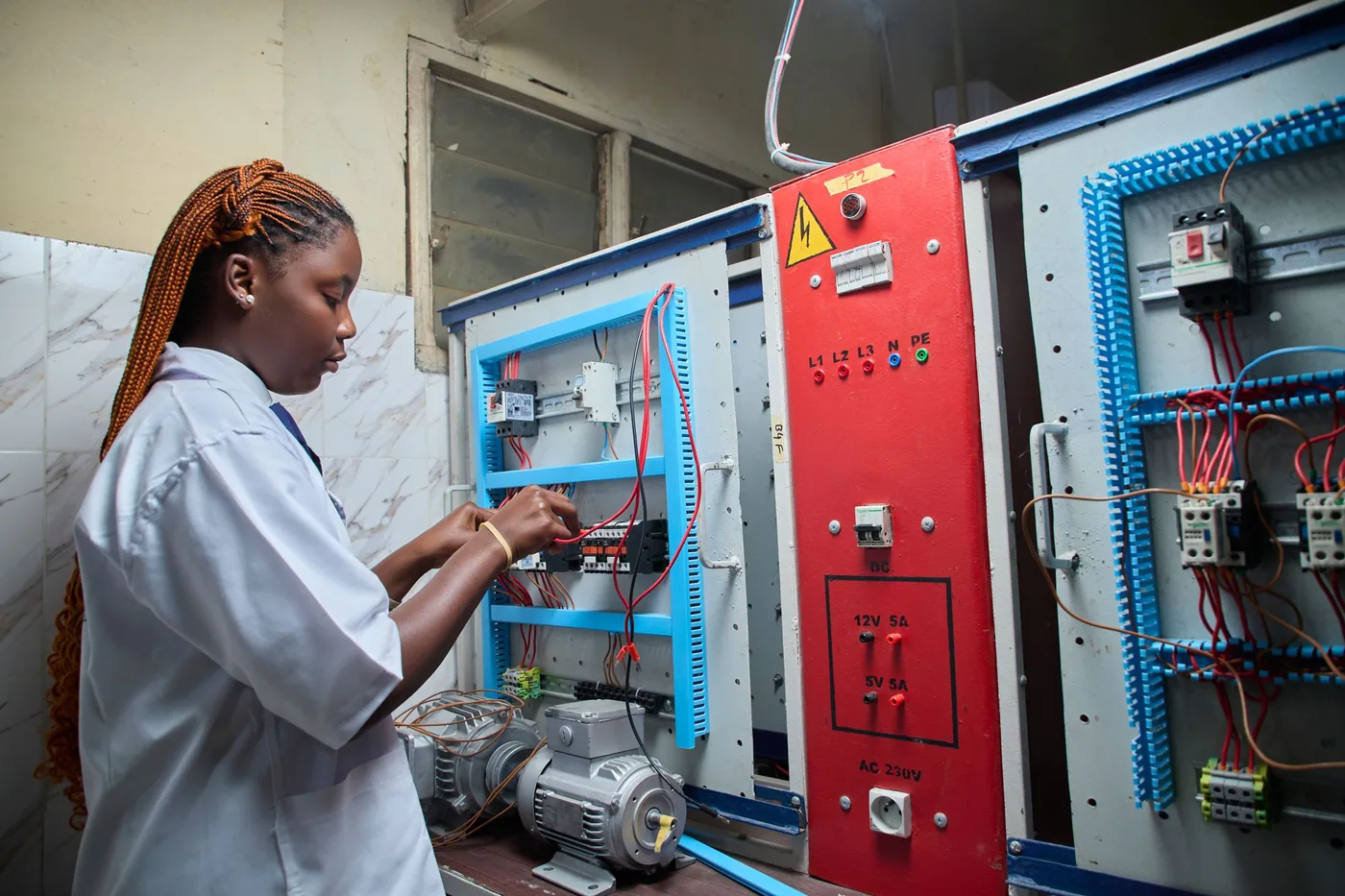
Figure 3 - Commissioning at an unmanned site: detector thresholds and MQTT publishing over LTE Cat-M1 are tuned in place, since backhaul is metered and monthly data volume is a design constraint. Photograph is illustrative of the field-service task.
Next case study
Shift Performance, Machine Utilisation and Quality in One Pane
Send the constraint that worries you most - a latency budget, a power budget, a certification date. We’ll tell you straight whether we’re the right team.